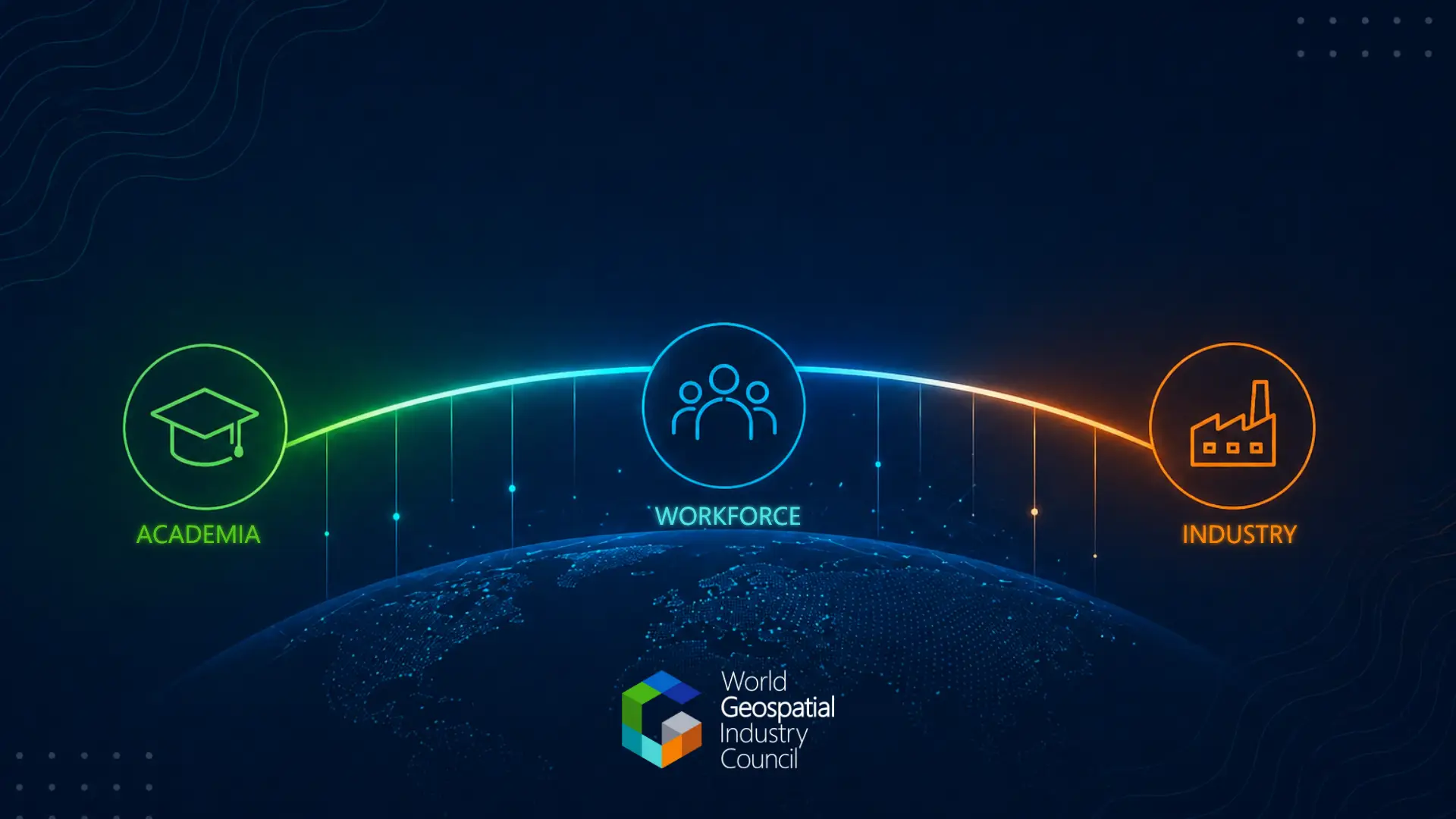
The Industry-Academia Committee supports WGIC’s mission to strengthen the global geospatial workforce development by advancing dialogue, sharing insights, and launching initiatives that highlight and foster the necessary skills across the geospatial sector.
Dr Siva Ravada (Oracle) spearheaded the Committee during 2025. The Committee saw active participation and contributions from members Dr. Nikolas Smilovsky (Bad Elf), Andres Abeyta (Bootcamp GIS), Dr Bushra Zaman (Deepspatial.ai), Elshan Musayev (EKM Global Consulting), Prof Michael Gould (Esri), Valrie Grant (GeoTechVision), Vattem Narendra Babu (iSpatial Techno Solutions), Anthony Paturzo (Leica Geosystems), Stephanie Michaud (Trimble), and Dr Zaffar Sadiq Mohamed-Ghouse (Woolpert).
Global Workforce Dialogue Through WGIC Leadership
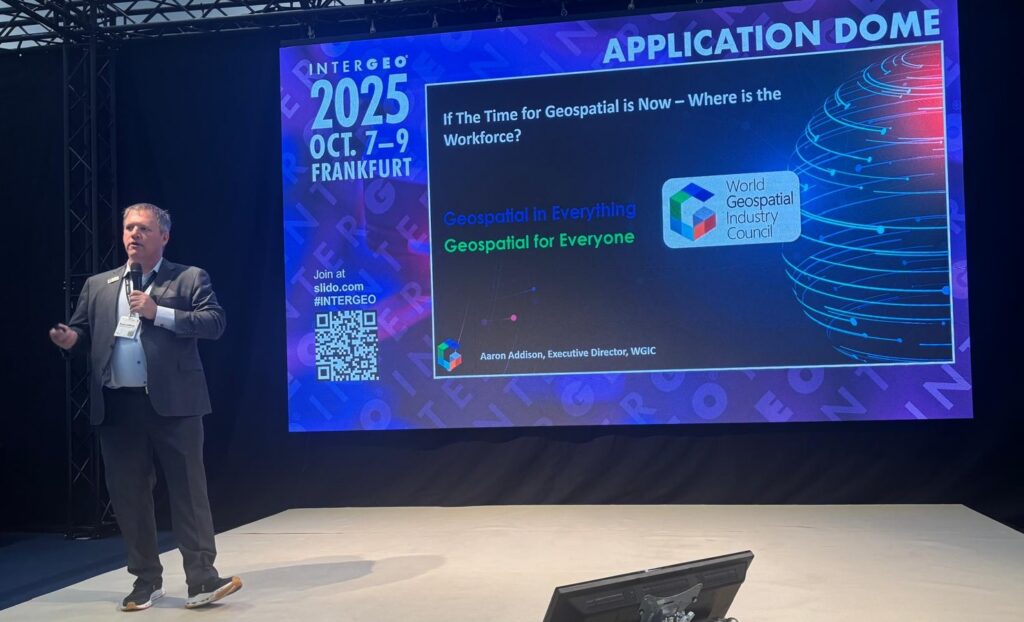
Workforce themes raised by the Committee were amplified throughout 2025 by the contributions of WGIC Executive Director Aaron Addison, particularly at Intergeo, on the Mapping the Conversations podcast, and in Geo Week News. These engagements highlighted the widening global skills gap, the impact of AI and automation on geospatial roles, and the need for deeper conceptual understanding, not just procedural training, across geospatial education pathways.
Engagement with Xploor Program
WGIC supported Deepspatial’s (WGIC member company) Xploor initiative, an applied learning and mentorship program through which student teams work on real-world geospatial challenges across various domains, including climate resilience, public health, agriculture, and urban mobility. This engagement reinforced WGIC’s commitment to practical workforce development and to bridging the gap between academic learning and industry needs.
From Classroom to Industry: Closing the Geospatial Skills Gap
WGIC collaborated with Deepspatial on a session that examined the urgent need to prepare students for rapidly evolving geospatial careers. The session, led by WGIC Industry-Academia Advisor Kuhelee Chandel, highlighted global workforce trends, including projected annual demand growth of ~11% until 2030 versus a ~2% rise in graduate supply, and the resulting shortage of early-career talent across GIS, remote sensing, GeoAI, and spatial analytics.
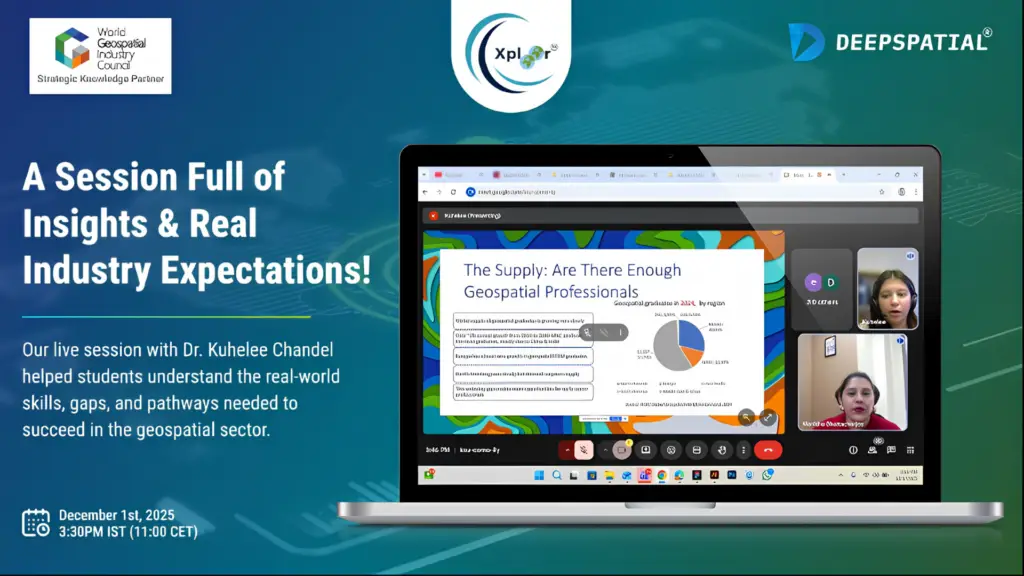
The discussion underscored shifting employer expectations, with growing emphasis on practical skills such as working with real-world datasets, GeoAI awareness, spatial SQL, web GIS, automation tools, and strong communication capabilities. Guidance on building job-ready portfolios and a structured 12-month readiness pathway provided students with clear steps toward entering the global geospatial talent pool.
Further, WGIC sponsored the UCGIS Symposium 2025 at the University of Wyoming, where Aaron Addison moderated a panel with Esri and engaged with leaders from industry and academia on strengthening the geospatial talent pipeline.
2026 Focus Areas
In 2026, the Industry / Academia Committee plans to:
- Release a white paper on geospatial workforce development and industry–academia collaboration.
- Prepare a detailed follow-up report expanding on the white paper’s findings and recommendations.
- Develop stronger partnerships with academic institutions to support industry-aligned training, curriculum insights, and applied learning pathways.
- Advance WGIC’s workforce development advocacy, focusing on emerging skill needs and global talent readiness.
- Launch a podcast series highlighting workforce development trends, employer expectations, and academic–industry collaboration.
- Contribute to global workforce dialogues through WGIC and external platforms, emphasizing future competencies and sector-wide priorities.
- Follow a monthly cadence for the committee meetings, scheduled for the second Wednesday of each month, to ensure consistent coordination and progress.